
Holiday in Crete
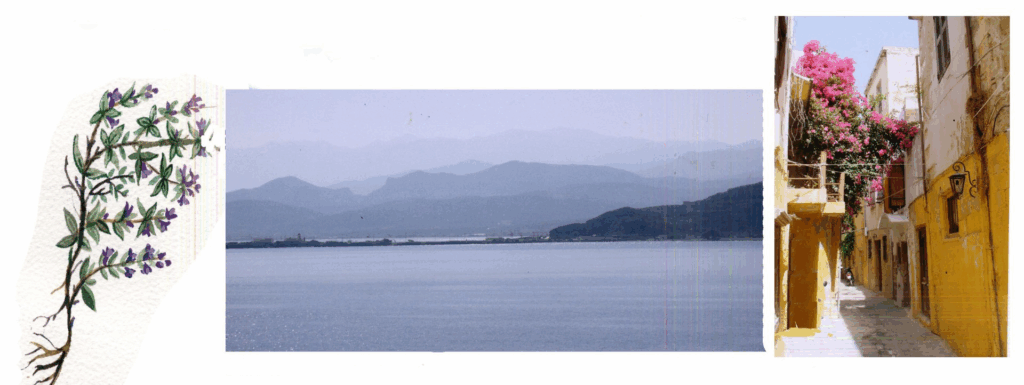
Every September I head off to Crete for a couple of weeks. I need to see the mountains, smell the herbs, and listen to the sheep bells.
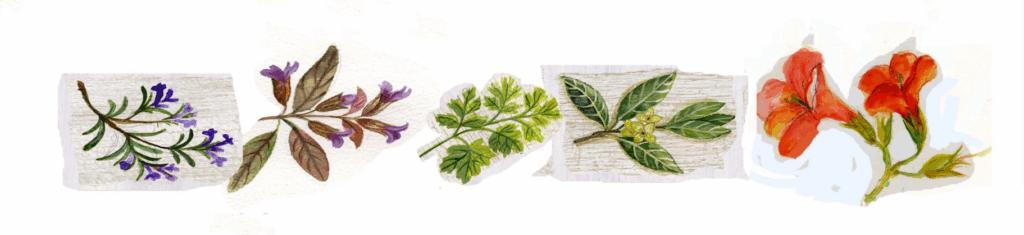
As the plane comes down over Souda Bay, I feel as if I’m coming home again. There’s something about this island that is very special, and although it is part of Greece, it somehow seems to be a land apart. The Cretans are fiercely independent people and have survived in spite of invasions by Turks, Italians, and Germans. Everywhere you go there are relics of the past: a Minoan harbour and tombs, Roman aqueducts and bridges, and amphitheatres hidden away. In Phaestos, in the south of the island, are the remains of a Minoan palace. It was here that the first form of writing (Linear B) was discovered, engraved on a stone tablet, and subsequently studied by scholars, including Michael Ventris, who managed to decipher the hieroglyphics. In Chania, a lot of houses in the old town are Turkish, with overhanging balconies, and there is a mosque, now used as a space for exhibitions.
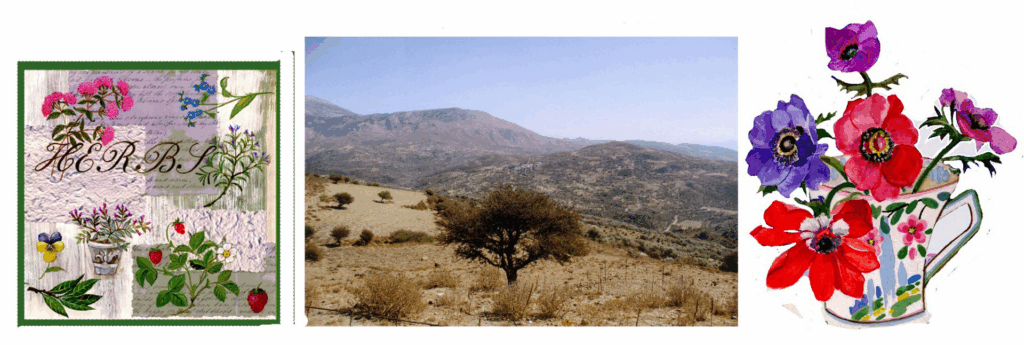
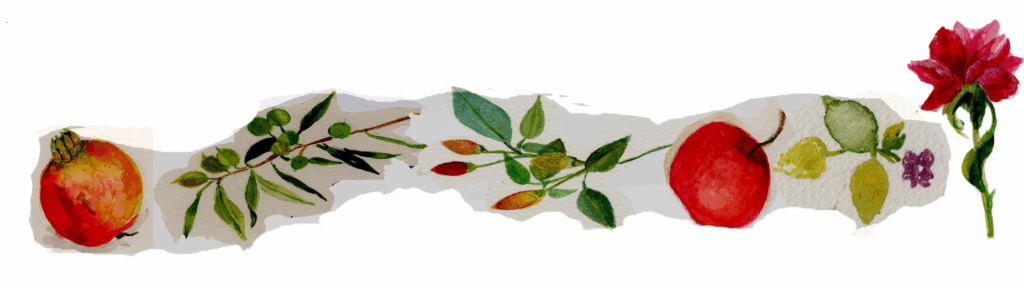
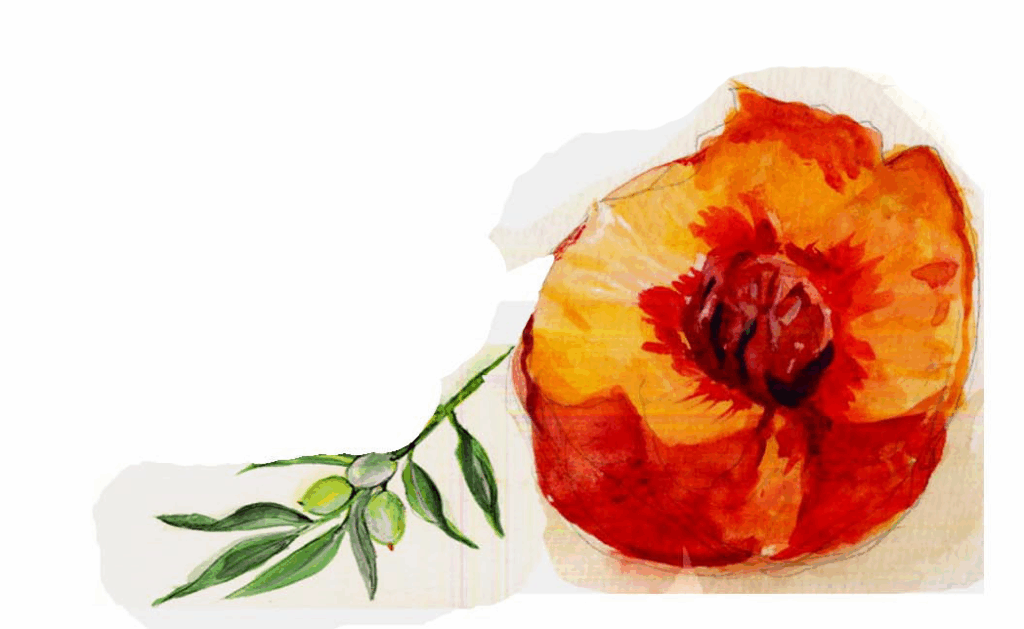
After a day relaxing in the sun and painting a few flowers and fruit to use in my designs, my small rented jeep arrived, and I was ready to go off exploring.
I headed up the winding road to the Omalos Plateau at the top of the mountain. Omalos is a strange place, miles from anywhere and the start of the Samaria Gorge, the biggest gorge in Europe. Herds of sheep and goats graze the rocky ground, and apple trees grow in small enclosures. This plateau is cut off in winter, when icy winds howl round the plateau and snow makes the small road impassable. During the last war, members of the resistance and supplies were parachuted into the plateau.
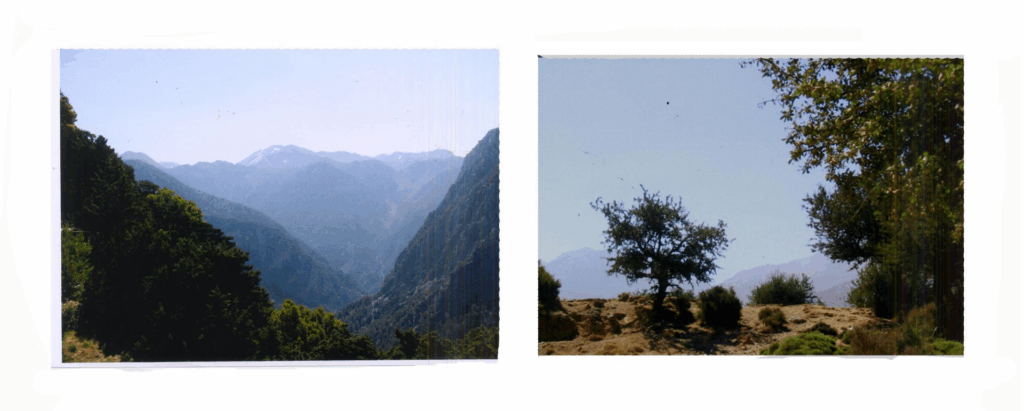
I was enjoying a glass of fresh orange juice and a homemade apple pie when two elderly men staggered into view from the direction of the gorge. They were strangers to each other, both German, and had attempted to walk the Gorge. After about half an hour, they had realised that they had totally underestimated the degree of difficulty in doing this, and their own fitness. Rather than risk the indignity of being rescued by a “donkey ambulance”, they had sensibly decided to go back to the start. I was very amused to hear them ask the taverna owner what time the buses went on a Sunday. He laughed heartily, telling them that buses did not exist here, Sunday or not, but luckily he had a cousin who ran a taxi service at Maleme and might be persuaded to come and rescue them. Obviously this was not going to be a cheap journey, but there were two of them, and they had no option. Meanwhile, the taverna owner suggested that they might like to sample his Retsina.
It was time to go, so I drove round the coastal road towards Sougia and overland to Deres, where I stopped for a gossip and Greek coffee with my old friend Stelios, who owns a taverna there. The coffee arrived together with a large bunch of grapes and a big chunk of cake which his wife had made.
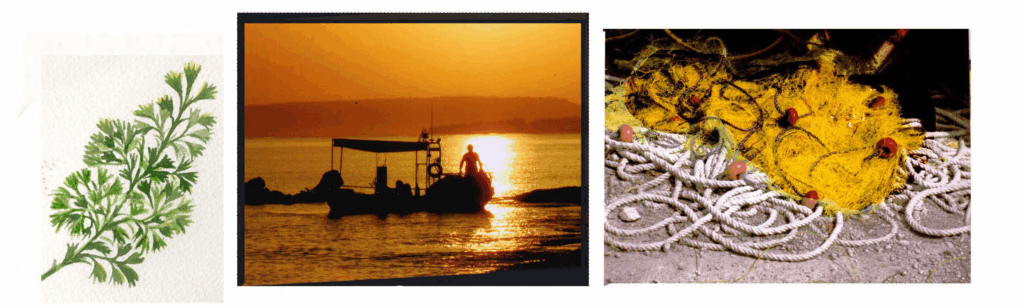
The following day I decided to pay a quick visit to my friend who has just finished building a complex of villas outside Kissamos. As I parked the jeep, he arrived with his son carrying three large fish that he had just caught. He was delighted to see me and invited me to lunch together with twenty-three friends and relations. Guests kept arriving and the kitchen was a scene of great activity. The fish were chopped up and put in a huge pot together with lemons, parsley, and masses of olive oil.
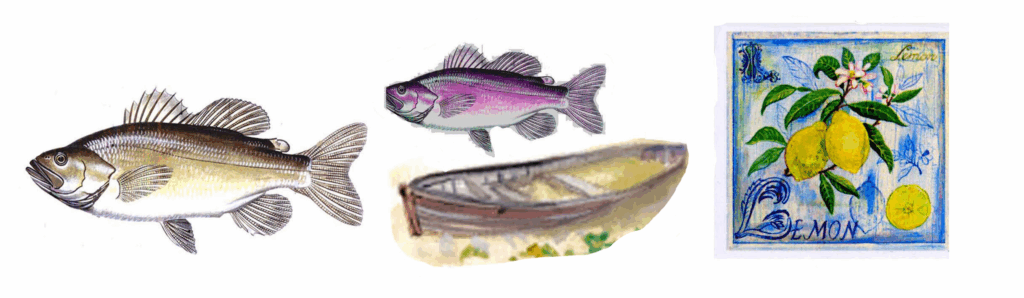
Some of it was sliced very thinly and dressed with oil, parsley, and lemon, to be eaten raw as an appetiser, while the livers were cut into small pieces and fried in oil. We all sat at a long trestle table as plates of fish, salad, bread, and bottles of wine arrived, followed by a rich fish soup and a series of sweet desserts. Eating and drinking went on all afternoon and into early evening, when the sun was getting lower in the sky and the mountains were changing colour into shades of blue and pink.
It’s amazing how one can get by with gestures, but conversation was a bit limited as my Greek isn’t very good and they all spoke very quickly, but it was an occasion not to be missed, which I’ll never forget.
The small village of Argyropouli is tucked away in the foothills of the White Mountains and is built on the ancient city of Lappa. There are remains of ancient mosaics and Roman tombs there. I parked the jeep and walked around the little town, stopping to buy some pure avocado oil that is produced here.
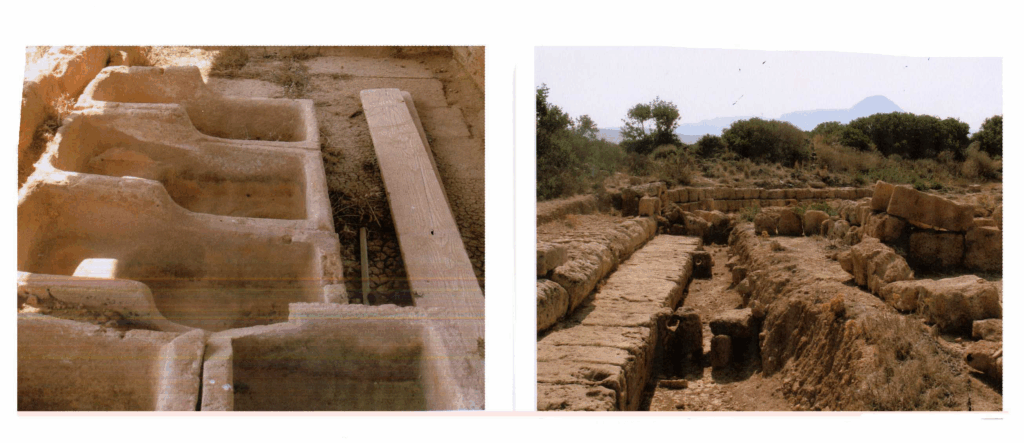
Down a small road are the remains of ancient Lappa, where water gushes out of the rocks into a series of trout ponds. Bananas, giant ferns, hibiscus, and oleander flowers grow in profusion out of the rocks.
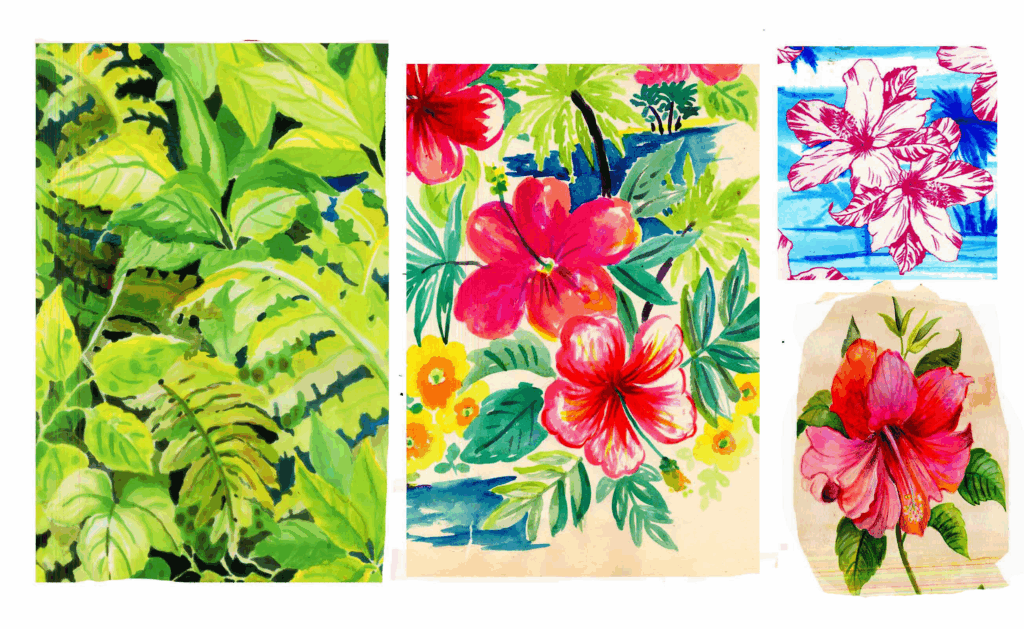
I stopped to make a few quick sketches of flowers, which I will use as reference at some point in the future when I am adding to my collection of tropical and swimwear designs.
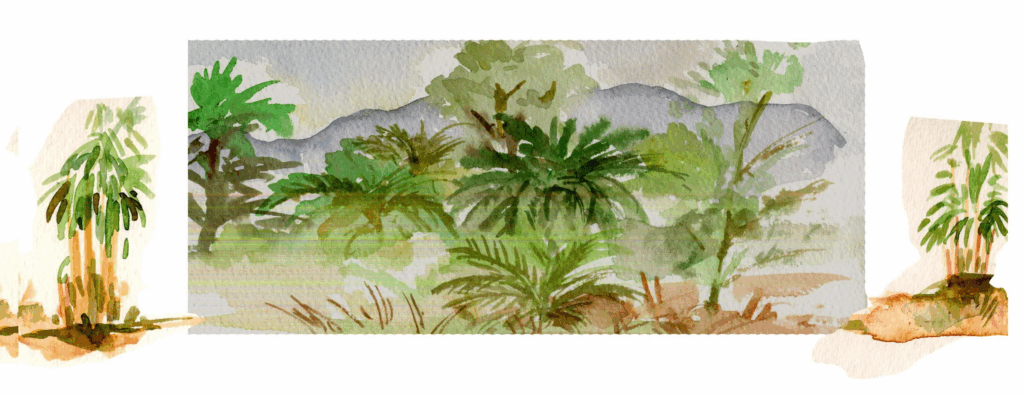
I drove on, crossed the river, and took the small road through the gorge, where sheep and goats clustered under the trees to escape the heat of the midday sun. This road eventually led to the mountain village of Asi Gonia, which nestles beneath the mountains. This village was one of the centres of the Resistance during the war, and its name roughly translates from Turkish as “Rebels’ Corner”. The Turks never managed to access it, as there was no road to the village until the 1950s. It was the birthplace of George Psychoundakis, who wrote a book entitled The Cretan Runner. This recounts his experiences during the last war, when he worked for the Resistance, carrying documents miles across the mountains to groups hiding in caves in remote places all over Crete.
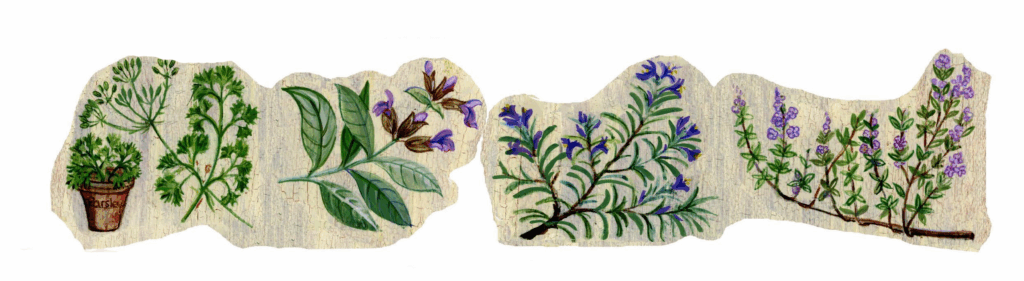
An old lady sat in her front garden and greeted me with a friendly “yassas” as I walked by. She assumed that I was German, but was surprised and delighted when I responded in Greek, telling her that I was, in fact, English. She picked a bunch of herbs growing nearby and handed them to me, smiling broadly, along with a large, juicy peach from a nearby tree. The peach was sun-ripened, luscious, and juicy, totally different from the peaches sold in supermarkets back in the UK.
Coming soon: Gorges and dodgy roads